Routine communication becomes expensive when staff recreate it every time
Small businesses send many messages whose purpose is predictable: acknowledging an enquiry, confirming an appointment, requesting information, reminding a client about an agreed action or explaining what happens next. Writing each message manually can consume attention without adding much value. Software can automate routine client communication so employees spend less time repeating known information and more time handling conversations that require judgement, reassurance or specialist knowledge.
Automate from a real business event
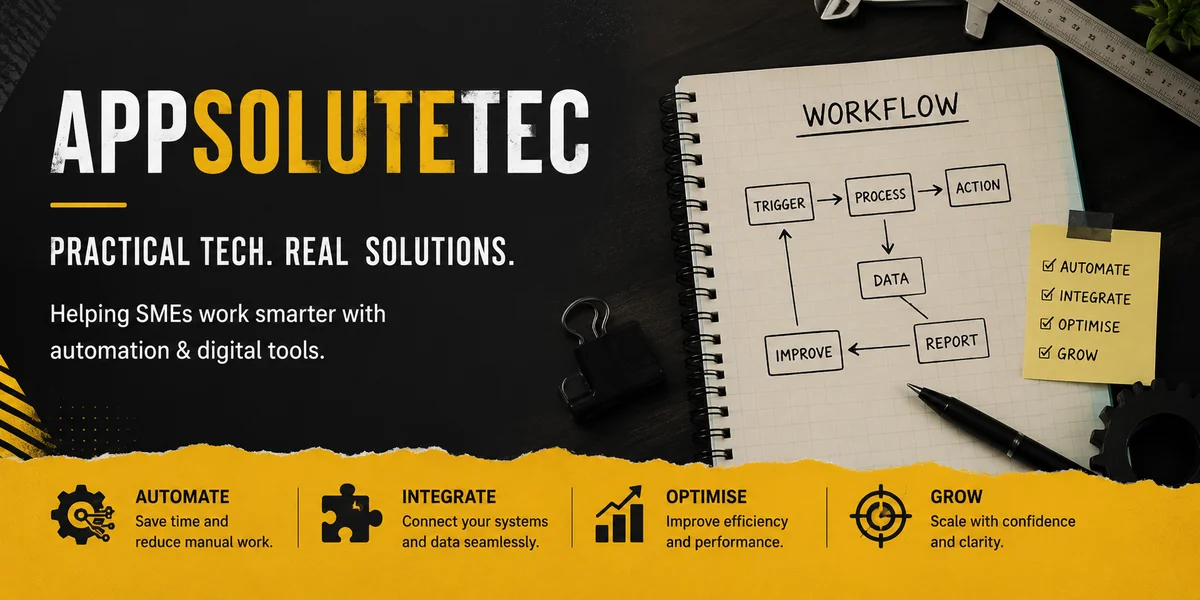
Useful communication automation begins with a dependable trigger. A submitted form, confirmed booking, completed stage or recorded status change can initiate an appropriate message. Avoid automations based on assumptions the underlying system cannot verify. If the software does not know whether an event actually occurred, it should not communicate as though it did. Connecting messages to authoritative workflow events reduces embarrassing contradictions and makes automation easier to troubleshoot.
Choose messages where consistency helps the client
Good candidates are communications with a stable purpose and limited need for discretion. Appointment details, receipt acknowledgements and requests for standard information often fit this pattern. Complaints, unusual commercial negotiations and sensitive circumstances usually require more care. Draw the boundary deliberately. Automation should remove repetitive assembly from predictable interactions rather than create a reason to avoid human involvement when a client clearly needs it.
Use templates without sounding disconnected
A template should provide structure, accurate standard information and a clear next step. Personalisation can insert appropriate known details, but adding a name does not make an irrelevant message personal. Keep wording aligned with the stage of the relationship and remove sections that do not apply. Review automated messages as part of the wider client experience so tone and terminology remain consistent with communications employees send manually.
Keep source information reliable
Automated messages may draw names, dates, service details and contact information from business systems. Decide which record owns each value and correct errors at the source rather than patching individual messages. Where an important field is missing or uncertain, route the case for review instead of sending a visibly incomplete communication. Automation amplifies both good and bad data, making source quality an operational issue rather than an administrative detail.
Stop sequences when the conversation changes
A follow-up sequence that continues after a client replies quickly feels careless. Define stopping and branching conditions alongside the initial trigger. A reply, cancellation, completed task or status change may need to end or alter future messages. If communication channels and workflow systems are disconnected, make sure the automation has another reliable way to recognise that the situation has changed.
Make exceptions visible to people
Not every delivery succeeds and not every client follows the expected path. Failed messages, missing information and unusual replies need an owner. Build exception queues or tasks so somebody can recover the situation. Automation should reduce the volume of routine work while making the remaining exceptions clearer; it should not hide unsuccessful contact inside technical logs that ordinary staff never review.
Respect preferences, privacy and applicable rules
Different types of communication may carry different privacy, consent or marketing considerations. Collect and use contact information for appropriate purposes, respect relevant preferences and avoid expanding automated messaging simply because a channel is available. Requirements depend on the message and business context, so obtain suitable professional advice where necessary. The workflow should make compliance easier to administer, not encourage indiscriminate contact.
Measure whether communication became more useful
Do not judge automation only by the number of messages sent. Review whether clients receive the information they need, whether avoidable enquiries decrease and whether employees spend less time correcting automated mistakes. Repeated client questions may indicate that a message arrives at the wrong point or does not explain the next step clearly. Treat those questions as evidence for improving the workflow.
Walk one check-in through its trigger, stop and exception routes
Before automating a recurring client check-in, test a representative case on paper and in the software. Start with the event that should trigger the message, identify every piece of data inserted into it and confirm where those values originate. Then follow three paths: the client does nothing, the client responds normally and the client reports something unexpected. The first path may justify a reminder; the second should stop unnecessary follow-up; the third should create a visible task for the appropriate employee rather than continuing a standard sequence. Finally, change one source value, such as an appointment or status, and confirm that future communication reflects the authoritative record. This small exercise catches many automation defects before they reach clients because it tests not just the ideal message but the points where the real conversation can diverge from the expected route.
Keep humans responsible for the relationship
Software can reliably handle routine client communication when the business defines triggers, approved content, stopping conditions and exception ownership. It should make predictable service more dependable without pretending every interaction is predictable. The strongest automation quietly handles repetitive coordination while giving employees better context and more time for conversations where empathy, judgement or expertise genuinely matters.